







By Sigma Politics
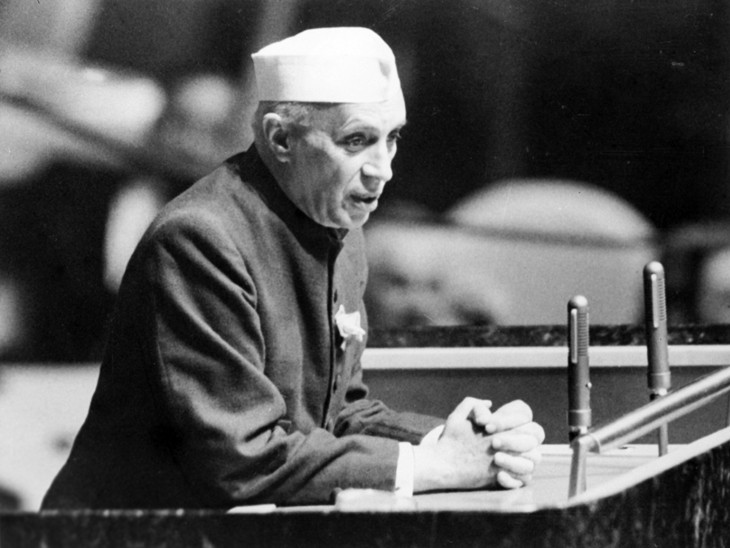
For years, a politically convenient claim has circulated in Indian discourse: Jawaharlal Nehru “gave away” India’s permanent seat at the United Nations Security Council (UNSC) to China.
It’s repeated often, shared widely, and believed by many. There’s just one problem — it’s not true. Not historically, not procedurally, not factually.
Let’s break this down with evidence, not emotion.
The Basic Fact Most People Ignore
The United Nations was founded in October 1945. At that time, India was still under British colonial rule. Independence came only in August 1947.
The five permanent members of the UNSC — USA, USSR, UK, France, and China (Republic of China) — were decided at the very creation of the UN.
So the first and most obvious question is:
How could Nehru “give away” a seat that never existed for India in the first place?
You Can’t “Gift” a UNSC Seat
There is also a fundamental misunderstanding of how the UNSC works.
Permanent membership is not a token that one country can hand over to another. It requires:
- An amendment to the UN Charter
- Approval by two-thirds of the UN General Assembly
- Ratification by all five permanent members
In other words, no individual leader — not Nehru, not anyone — has the authority to “give away” such a seat.
What Actually Happened in 1950?
The origin of this myth lies in a misunderstood historical episode.
Around 1950, during the early Cold War years, the United States reportedly explored the idea of India occupying a permanent seat — primarily as a way to counter Communist China.
Nehru’s response was not a rejection of India’s interests, but a reflection of his geopolitical worldview. He argued that:
China, representing a massive population, must be part of the global decision-making structure.
This was not about surrendering India’s position.
It was about rejecting Cold War bloc politics and advocating for a more representative global order.
The Missing Evidence
Despite the confidence with which this claim is made, there is:
- No UN resolution
- No official offer
- No treaty or documented proposal
that shows India was formally offered a permanent UNSC seat.
Much of the narrative traces back to:
- Selective interpretations of diplomatic correspondence
- Memoirs taken out of context
- And a 2011 political claim by Murli Manohar Joshi, not primary archival evidence
In serious historical analysis, absence of primary documentation is not a minor gap — it is decisive.
China’s Seat Was Never India’s
From 1945 to 1971, China’s UNSC seat was held by the Republic of China (Taiwan).
In 1971, through UN Resolution 2758, the seat was transferred to the People’s Republic of China (PRC).
Two crucial facts often ignored:
- India voted against this resolution
- Nehru had passed away in 1964, seven years earlier
So the idea that Nehru somehow “enabled” China’s permanent seat collapses completely under timeline scrutiny.
What Nehru Actually Believed
Nehru consistently argued for a more inclusive world order. His position was simple:
- Global institutions must reflect demographic and civilizational realities
- Excluding a country like China — with a quarter of humanity — would weaken legitimacy
Importantly, he supported greater representation for both India and China, not one at the cost of the other.
Agree or disagree with his worldview — but misrepresenting it is intellectually dishonest.
Why India Still Isn’t a Permanent Member
India’s absence from the UNSC has nothing to do with Nehru.
The real reasons are structural:
- The UNSC has never been expanded since 1945
- Existing P5 members are reluctant to dilute their veto power
- Cold War dynamics froze the power structure for decades
India’s case today is strong — economically, demographically, and diplomatically — but reforming the UNSC is a global political challenge, not a historical mistake.
Why This Myth Persists
Because it is politically useful.
The narrative serves to:
- Discredit Nehru’s legacy
- Frame past leadership as weak or “anti-national”
- Simplify complex global history into a digestible blame story
And in the age of viral content, simplicity beats accuracy.
The Real Takeaway
India absolutely deserves a permanent seat at the UNSC. That demand is legitimate and increasingly urgent.
But building that argument on fabricated history weakens India’s credibility, not strengthens it.
Foreign policy debates require facts, not folklore.
Because when myths replace history,
policy becomes propaganda — and nations pay the price.
For more such fact-based political analysis, follow Sigma Politics.