







By Sigma Politics
Silencing Protest, Not Solving Problems: The Noida Policy Dilemma
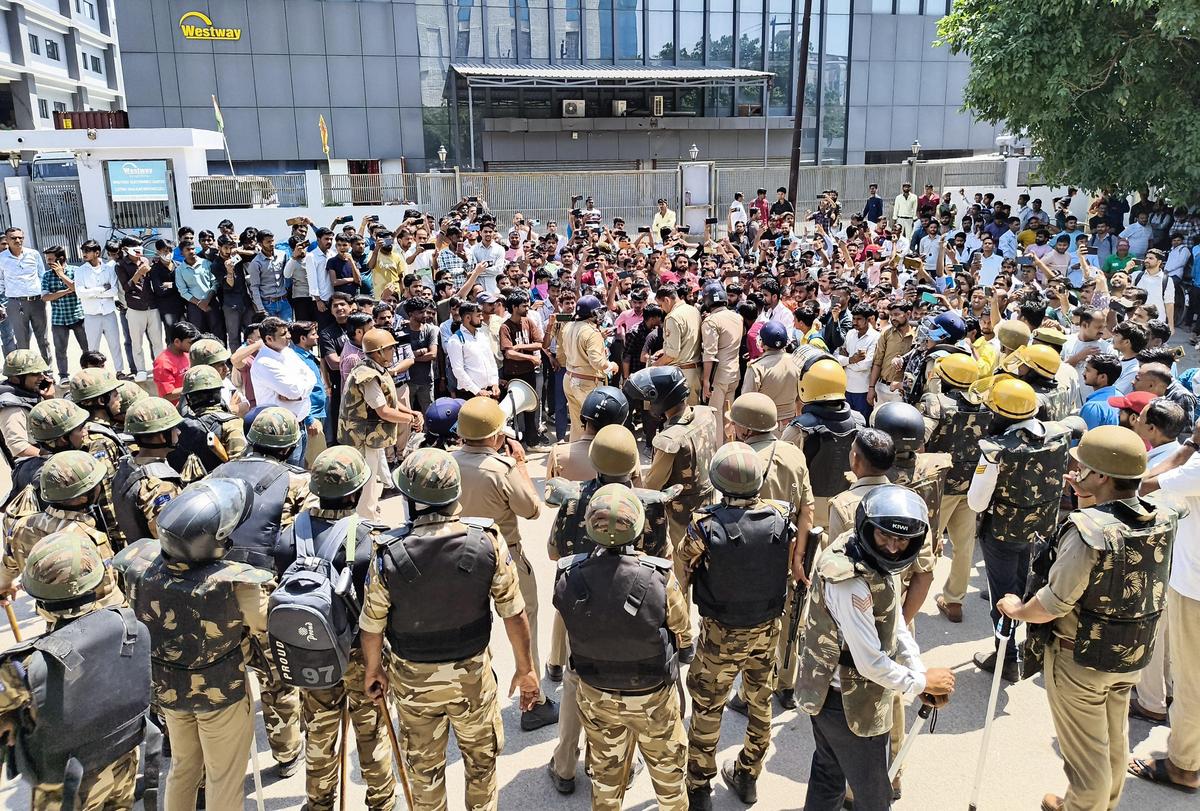
The recent stance that if workers employed through outsourcing companies protest, the licences of those companies may be suspended raises a fundamental question: who exactly is being protected, and at whose cost?
At first glance, such a move may appear as an attempt to maintain order. But look closer, and it reveals a troubling approach—one that risks punishing workers for expressing legitimate grievances rather than addressing the root causes behind those grievances.
Because the reality is simple:
workers do not protest without reason.
In industrial hubs like Noida, thousands of workers employed through outsourcing firms operate under fragile conditions—low wages, minimal job security, and limited bargaining power. For many, even basic economic stability remains out of reach despite long working hours.
When such workers protest, it is not an act of disruption for its own sake. It is often the last available tool to demand dignity, fair wages, and humane conditions.
Now consider the implication of suspending licences of outsourcing companies if their workers protest.
The immediate consequence is not reform—it is disruption of employment. Companies facing licence threats may either terminate workers, shut down operations, or avoid hiring altogether to minimize risk. In each scenario, the worker—the very person at the center of this issue—ends up bearing the cost.
This creates a paradox:
- If workers protest, they risk unemployment.
- If they remain silent, they continue to endure poor conditions.
Either way, the burden falls on them.
Such a framework does not resolve conflict; it displaces it. It shifts an economic and labor issue into the domain of law and order, where the focus moves from “why are workers protesting?” to “how do we stop them from protesting?”
But silencing a problem does not eliminate it.
Policies that discourage or indirectly penalize protest risk undermining one of the most fundamental aspects of a functioning democracy—the ability of citizens to voice grievances without fear of disproportionate consequences.
More importantly, this approach avoids confronting the central issue:
why are wages and working conditions insufficient in the first place?
If compensation kept pace with living costs, if job security was stronger, and if grievance mechanisms were effective, protests would be far less frequent.
The goal of governance should not be to reduce the visibility of unrest, but to reduce the need for it.
Turning protests into liabilities for companies may create short-term compliance, but it does not build long-term trust. In fact, it may deepen insecurity among workers, discourage transparency, and widen the gap between employers and employees.
The real solution lies elsewhere:
- Strengthening wage frameworks
- Ensuring fair labor practices
- Creating accessible grievance redressal systems
- Encouraging dialogue between workers, companies, and administration
Because at its core, this is not a law-and-order problem.
It is a question of economic justice.
And economic justice cannot be enforced through fear.
It must be built through fairness.